

Bitcoin Gains Popularity As Banks Stick To Quantitative Easing
Unlike the central banks’ quantitative easing policy, the reduction of new funds being pumped into the Bitcoin ecosystem is stabilizing the price. It is not the first time some experts are pointing towards Bitcoin as an asset to keep an eye on whenever financial trouble seems to be looming on the horizon. Cryptocurrency is a once-in-a-lifetime investment opportunity, due its scarcity and global availability. Even though some people may argue it is too late to invest in Bitcoin or other currencies, that is far from the case. Moreover, the policies employed by banks to solve the economic....
Related News
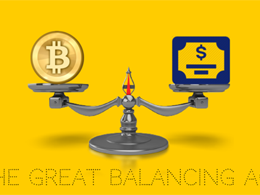
Quantitative Easing and Bitcoin. The European Central Bank has recently announced a 1.1 trillion Euro sovereign bond purchasing program. This action in broadly referred to as Quantitative Easing. It is a monetary policy brought into existence by the Bank of Japan on March 19th, 2001. The first concept to understand in relation to Quantitative Easing is that no expert or policy-maker truly knows how this monetary experiment ends because it is a historically unprecedented action. A 15 year existence is a negligible amount of time in the history of human commerce. With that in mind, while....

Anyone who understands the "undeclared" global currency war can agree that there can't be a real winner in the end. For those who are new to this concept, central banks around the globe have embarked on monetary easing by way of adopting quantitative easing or by lowering their interest rates, in order to awash their respective financial systems with liquidity. Even though central banks argue that low interest rates or infusing liquidity is vital to reviving consumer demands in the flailing economies, there is more truth to that! Nations adopt such extreme measures in order to devalue....

Bitcoin has not grown at the rapid rate expected so far in the cycle, and some have blamed this on the fact that the Federal Reserve has been practicing quantitative tightening. This refers to a period when the central bank is reducing its money supply in a bid to reel in excess liquidity. As a result, buying power seems to have fallen as there isn’t enough liquidity flowing into risk assets such as Bitcoin. However, this could all be changing very soon as the Fed begins to change its stance. Quantitative Easing Could Bring About More Liquidity After a long stretch of quantitative....

What to Know: 1️⃣ The Federal Reserve’s return to quantitative easing could unleash a wave of global liquidity — potentially driving Bitcoin and altcoins toward 100x returns as investors chase risk assets. 2️⃣ Bitcoin Hyper ($HYPER) stands out as a strategic altcoin play, built as a Layer-2 scaling solution designed to extend Bitcoin’s speed, utility, […]
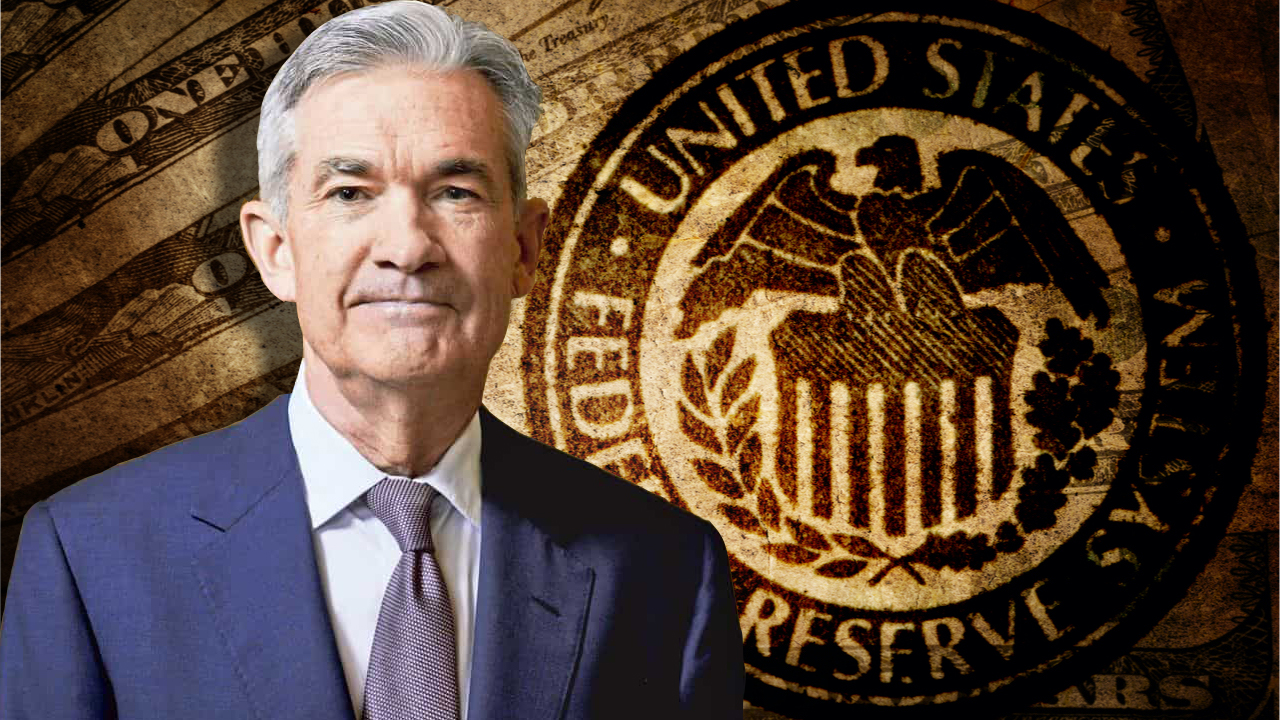
Global markets have defied predictions as the U.S. Federal Reserve and several central banks worldwide are prepping to slow down monetary easing policy. On Wednesday, the U.S. central bank’s Federal Open Market Committee (FOMC) said it plans to taper quantitative easing (large monthly asset purchases) and end the program by March 2022. Moreover, the FOMC members decided to keep interest rates at zero but expect at least three rate hikes next year.
Federal Reserve Outlines Asset Purchase Tapering Plan and Rate Hikes for 2022
Since the onset of Covid-19 in the United....